Desalination in Chile: there is a new law, and the risk has moved
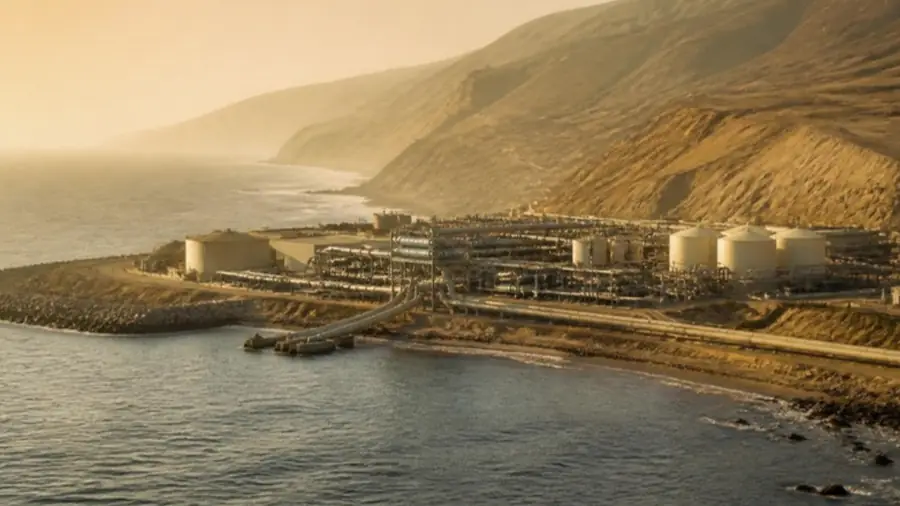
Chile desalinates more seawater than any other country in Latin America, and since May 2026 it has, for the first time, a law governing the activity. Both matter less than they appear to, because what decides whether a project goes ahead is not in the new law.
On this page
There is a law, and almost everything substantive sits in regulations that do not yet exist
Law No. 21,813, published in May 2026 after some seven years in Congress, is Chile's first specific legal framework for desalination. It places the activity under the General Water Directorate, creates a Desalination Unit within it, governs the granting, exercise, oversight, renewal and expiry of desalination concessions, and mandates a National Desalination Strategy that will define priority siting, standards and financing models.
The Ministry of Public Works introduced it with a sentence worth reading carefully: the law «gives a regulatory framework to an industry that has already been operating in the country for more than 20 years». It organises what already existed.
The installed base gives the scale. According to the Ministry of Public Works and the General Water Directorate, as of May 2026 Chile had 24 operating desalination plants with more than 11,000 litres per second of capacity, with projects entering operation during 2026 expected to raise that by around 30%.
The permit that matters is not issued by the water regulator
Here is the piece that surprises those arriving from abroad. A desalination plant needs to occupy the coastal edge and the seabed in order to take in water and to discharge, and that title is granted neither by the water authority nor by the environmental one: it is granted by the Ministry of National Defence, by supreme decree signed «by order of the President of the Republic».
| Instrument | When it applies | Who grants it |
|---|---|---|
| Major maritime concession | Term over 10 years or investment above 2,500 UTM | Ministry of Defence, by supreme decree |
| Minor maritime concession | Term of 1 to 10 years and investment up to 2,500 UTM | Ministry of Defence, by supreme decree |
| Permit or authorisation | Transitory, up to one year; not renewable or amendable | Director General of the Maritime Territory, by resolution |
No maritime concession may exceed 30 years. A desalination project is sized for twenty or thirty years of operation, so the term of the concession and the term of the supply contract have to be looked at together from the outset, not at the end.
The same holds for the other layers bearing on a single site: the plant is on land, the intake and discharge are at sea, and the pipeline crosses third-party property. That is exactly the problem we deal with in the chapter on siting.
Brine has no standard in Chile
This is counterintuitive and worth saying plainly: Chile has no emission standard specific to brine discharge. Discharge is governed by the general standard for liquid waste to marine waters, which regulates chlorides as a generic parameter applicable to any source, without distinguishing whether the effluent comes from a desalination plant. There is no Chilean standard for discharge salinity.
What does exist, and what is in practice required, are the maritime authority's guidelines for the environmental assessment of desalination projects, dated 2015. Absent a national standard, those guidelines invoke international references — Spain, Australia, the United States environmental agency — and set concrete engineering and modelling requirements.
| Matter | What is required |
|---|---|
| Salinity reference | No Chilean standard; foreign criteria are invoked for maximum increase over baseline salinity |
| Plume modelling | Near field and far field, under the least favourable oceanographic scenarios and continuous discharge |
| Outfall design | Submerged, with diffusers angled upward |
| Intake suction velocity | Below 0.15 m/s |
| Monitoring | Half-yearly minimum, with verification of the modelling during the first year |
Note the shape of this, because it explains the next section: an administrative guideline with no standing as an emission standard became, ten years later, the axis of a judicial annulment.
The risk moved from approval to annulment
For years Chilean case law favoured desalination plants. In 2020 the First Environmental Court rejected a claim against a plant in Caldera. In 2021 the Supreme Court upheld the ruling that had rejected fishermen's claims against the ENAPAC project in Atacama, dismissing both the argument of insufficient public participation and that of incompatibility with the coastal planning instrument.
In May 2026 that pattern reversed. The Second Environmental Court annulled the environmental qualification resolution of a Collahuasi project worth more than US$3.2 billion — the same one referred to on the mining page — and did so narrowly, on two components: human environment and marine environment. The project included a desalination plant with a high-elevation pipeline, and it is that part which is now halted.
What the court ordered reassessed is a list any desalination plant must be able to answer:
- Human environment: adequate characterisation of the indigenous associations of the affected fishing cove, prior meetings under the SEIA Regulation, and assessment of whether indigenous consultation is required.
- Marine environment: verifiability of the intake suction velocity, sedimentation of the hypersaline discharge on the seabed, spatial and temporal variability of impacts, and a monitoring plan extending beyond the first five years.
The first two marine items are, word for word, what the 2015 guidelines asked to be modelled. The relevant risk in desalination is no longer failing to get approved: it is having the approval annulled — against a brine standard Chile has not yet written, and which is for now built case by case.
Why mining has no alternative
Demand here is not a bet: it is a substitution already under way. On Cochilco's 2025-2034 projection, seawater in Chilean copper mining goes from 40.7% of consumption in 2024 to 67.6% in 2034, while continental water falls by around 39% over the same period. Total consumption barely moves.
Cochilco states the finding better than we could: what matters «does not lie in the total increase in demand, but in the change in its composition by source of supply, from continental water to seawater».
Two refinements that change a project's analysis. First, by 2034 around three quarters of that seawater will be desalinated and the rest used directly, untreated: two different pieces of infrastructure with different permits. Second, the growth is not linear: expansion to 2027, contraction towards 2030, and a new rise from 2031. A project sizing its supply along a straight line will be wrong in both directions.
In drinking water the substitution has already happened in one case: since March 2025, with the expansion of the northern desalination plant, Antofagasta and Mejillones are supplied entirely with desalinated water.
What is decided first
Four questions that condition everything else:
- Who is in the fishing cove? Artisanal fishing and coastal communities appear on no certificate, and they are the component on which the sector's largest case was annulled. Engagement starts before filing, or it is late by definition.
- How does it discharge, and with what modelling? With no national standard, the project's defence is the quality of its plume modelling and its monitoring plan. It is early spend that buys years.
- How long is the maritime concession against the supply contract? The ceiling is 30 years and the grantor is the Ministry of Defence. That calendar does not compress with budget.
- Where does the pipeline run? High-elevation pumping is an infrastructure project in its own right, with its own easements, its own assessment and its own calendar.
Our limit, stated
This analysis is generic and identifies the regulatory framework, the enabling titles and the layers of rights that condition a desalination project. It is not a title study or a current ownership report, it does not replace environmental assessment or anticipate its outcome, and we do not do process engineering, oceanographic modelling or outfall design.
Evaluating a desalination plant in Chile?
The file is won or lost on communities and marine environment, and that is built before filing. A thirty-minute conversation is usually enough to see where the weak point sits.
Start a conversationSources: Law No. 21,813 on desalination and communications from the Ministry of Public Works and the General Water Directorate (May 2026) · Supreme Decree No. 9 of 2018 of the Ministry of National Defence, Regulation on maritime concessions, arts. 5, 6, 8 and 16 · Supreme Decree No. 90 of 2000, emission standard for liquid waste to marine and surface continental waters · Directorate General of the Maritime Territory, Guidelines for the environmental assessment of industrial desalination projects (2015) · Second Environmental Court, judgment in joined cases R-430-2023, R-448-2024 and R-457-2024, and case R-539-2025 · First Environmental Court and Supreme Court, ENAPAC case (2021) · Cochilco, Projection of water demand in Chilean copper mining 2025-2034 (March 2026) · Government of Chile, expansion of the northern desalination plant in Antofagasta (March 2025). Last reviewed: October 2026. General information, not legal advice.