Renewable Energy in Chile: The Problem Is No Longer Generating, It Is Evacuating
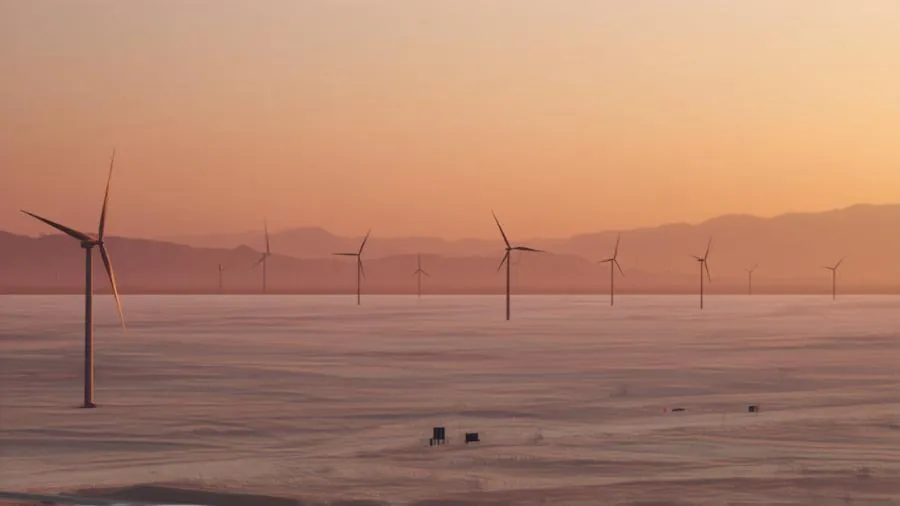
Chile solved the problem of generating renewable energy and created a new one: it cannot evacuate all it generates. For an investor, that means the right question about a portfolio is no longer how many megawatts it has, but how many it can actually inject.
Where the grid stands
As at 31 July 2026 the national electricity system had 38,438 MW of installed capacity, of which 20,265 MW is non-conventional renewable — 53% of the fleet. Solar PV contributes 12,441 MW and wind 6,310 MW. In 2025, 63.3% of national generation was renewable including conventional hydro, and 42.4% was non-conventional renewable.
Curtailment, which is the real story
Between January and July 2026, 2,680 GWh of renewable generation was curtailed — producible energy the system could not take — the highest cumulative figure on record. A decade earlier, in 2016, annual curtailment was around 100 GWh.
But the figure that decides an investment is not the total: it is the concentration. Antofagasta and Atacama account for between 72% and 77% of all national curtailment, and more than 70% of it is solar PV. In March 2026 curtailment for the month equalled 20% of all solar and wind generation.
This makes location the dominant variable in the investment case. A technically flawless solar project in the north can have a commercial capacity factor far below its technical one. We develop this in solar energy in northern Chile.
Storage ran four years ahead of its own target
The national target of 2,000 MW of battery storage set for 2030 was met on 31 March 2026. And what follows is of a different order: as at May 2026 there were 4,937 MW and 20,022 MWh under construction across 37 systems, worth US$4.121 billion. Antofagasta leads the construction pipeline — storage is being built exactly where the curtailment is.
The sector's total construction pipeline is 128 projects worth US$11.733 billion: alongside storage, 2,487 MW of generation — 78% solar — and 2,182 km of transmission.
The regulatory enabler arrived after the market: Supreme Decree 32 of 2025, published on 17 June 2026, redefines system operation and introduces centralised dispatch of storage systems, opportunity costs for storage and pumped hydro, and a new proration based on available rather than maximum capacity.
Transmission: the project that defines the decade
The Kimal–Lo Aguirre line, Chile's first in direct current, began construction in February 2026: 3,000 MW of capacity across some 1,346 km connecting Antofagasta to the Santiago Metropolitan Region through 28 municipalities. In June 2026 the Committee of Ministers upheld its favourable environmental qualification, unblocking the project.
On cost we should be candid: sources differ between US$1.48 billion and US$2.0 billion, and there is no official commissioning date issued after construction started. The 2021 award projected the end of this decade.
In parallel, the National Electricity Coordinator is tendering 19 new substations and lines worth more than US$500 million, with commercial bids opening in November 2026, and its 2026 plan contemplates 43 works focused on northern congestion and on enabling storage in the centre-south.
Prices, auctions and the system's debt
The 2025/01 supply auction was awarded at US$64.5 per MWh, against an average price for contracts in force for 2026 of US$92.3 per MWh. New energy enters roughly 30% below the contracted stock, compressing margins for incumbents and opening space for entrants.
The 2026/01 auction is open: 2,835 GWh, supply from 2029, award expected on 13 January 2027, and with explicit exclusion of bids backed by coal, petcoke, diesel or fuel oil.
The third element is debt. The law known as “Ordenemos la Cuenta”, dispatched in July 2026, established the mechanism to pay down a distribution-company debt of around US$900 million through charges on bills between 2028 and 2035. Its origin was regulatory delay — 43 months in setting distribution value added and 28 months in transmission — which is itself the best argument for why Chilean regulatory risk is not theoretical.
Distributed generation
In June 2026 the Comptroller General approved Supreme Decree 1, amending the regulation for small distributed generation, validating a new stabilised-price mechanism: injections are valued at a basic price determined by time intervals, giving more stable revenue signals and less exposure to marginal cost. The path there included the withdrawal of earlier decrees and a period of regulatory uncertainty during the first quarter.
Where an energy project usually starts
- Permitting routeElectrical concessions, easements, environmental assessment and connection, in order and with dependencies.
- Regulatory admissibility opinionWhether the project as designed is viable, and what would have to change.
- Chile landingFor the developer entering the market who needs structure and local representation.
- Jurisdiction fileIf you are still choosing between Chile and another jurisdiction in the region.
Our stated limit
We describe regulatory framework, permitting and institutional risk. We do not do electrical engineering, we do not model generation or run connection studies, and we do not recommend investments. We criticise public policy, never the internal decisions of the bodies we advise.
Developing renewable energy in Chile?
Estribor Consulting Group works with foreign investors from the entry decision through to representation before authorities.
Start a conversationSources: National Energy Commission, Monthly ERNC Report (as at 31 Jul 2026) · National Electricity Coordinator, via press (Sep 2026) · Ministry of Energy, Projects Under Construction Report (May 2026) · CNE, 2025/01 auction award (Dec 2025) and 2026/01 terms (Jul 2026) · Garrigues on Supreme Decree 32/2025 · ACERA, 2025 balance. Last reviewed: September 2026. General information, not legal advice.